

Seva Chiropractic helps patients improve posture patterns linked to neck tension, shoulder tightness, back discomfort, screen strain, and movement imbalances caused by daily habits and repetitive stress. Care focuses on identifying why posture keeps falling back into the same patterns and building a correction plan designed to create lasting change instead of temporary fixes.
Holiday travel can be exciting, but long hours in a vehicle or airplane seat may leave your body feeling tight before the festivities even begin. Whether you are driving to see loved ones or flying...
Holiday travel can be exciting, but long hours in a vehicle or airplane seat may leave your body feeling tight before the festivities even begin. Whether you are driving to see loved ones or flying for a seasonal escape, staying in one position for too long can place added stress on your muscles and joints.
The encouraging news is that feeling better on the road does not require a complicated workout. A few easy stretches, brief movement breaks, and mindful posture adjustments can help reduce travel-related discomfort. Taking a minute or two to reset each hour can help you arrive feeling more comfortable, mobile, and ready to enjoy time with family and friends.
Why Travel Can Cause Stiffness and Tension
Long periods of sitting can affect the body more than people realize. In a car or on a plane, the hips stay bent for extended stretches while the upper body often shifts forward. This position can contribute to tight hip flexors, along with tension in the lower back, chest, shoulders, and neck.
When muscles do not move through their usual range of motion, they can begin to feel restricted during the trip. It is common to stand up after several hours and notice stiffness through the hips, back, or neck. Frequent, gentle movement can help address that tension before it becomes more persistent.
Stretching During a Long Drive
Spending hours behind the wheel can leave joints feeling less mobile and muscles feeling cramped. Planning to move during regular fuel, meal, or rest stops is one of the simplest ways to support comfort throughout a road trip.
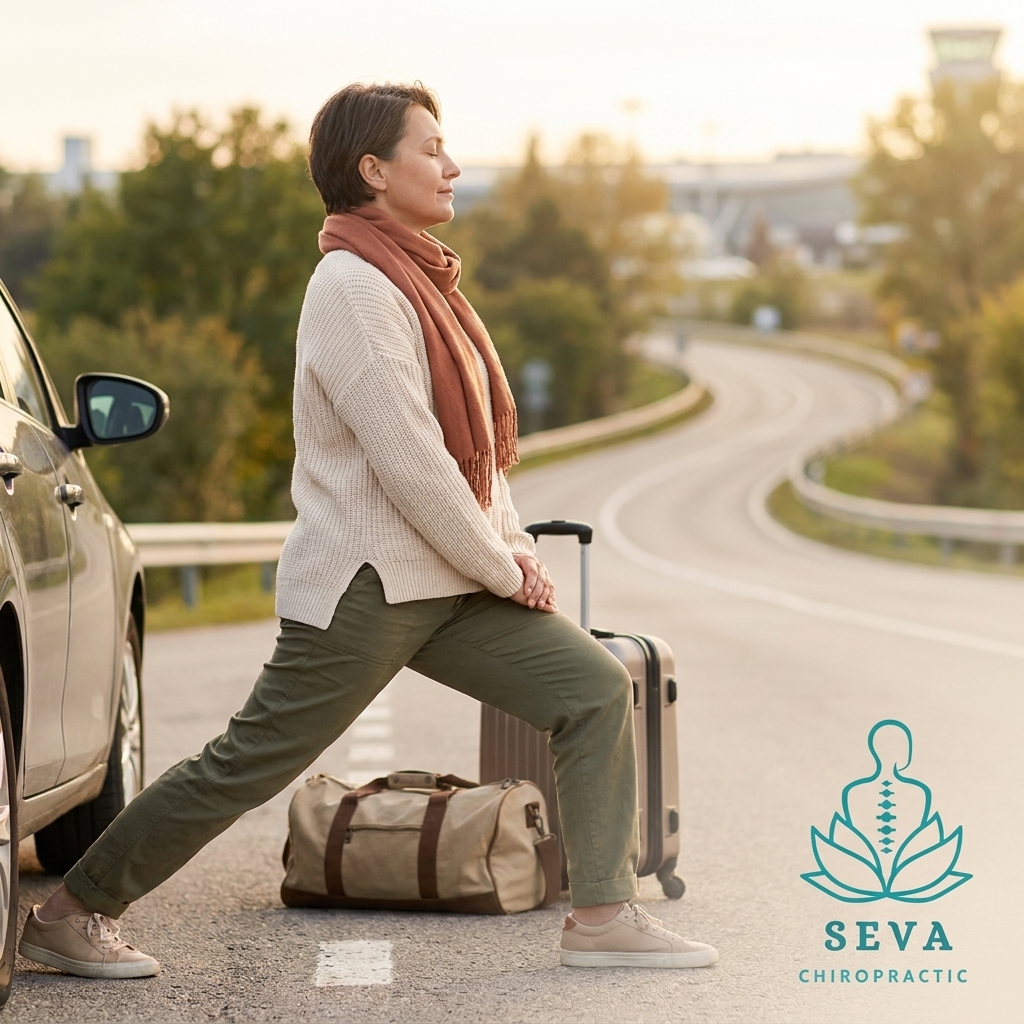
At a stop, try a runner’s lunge to give the front of the hips a chance to lengthen after prolonged sitting. Even a short stretch can help restore some ease of movement before you return to the driver’s seat.
You can also use a stable wall or surface near your vehicle to reverse the forward position that driving can create. Place your hands on the surface, reach upward, and gently bring your chest forward. This movement can help release built-up tension across the chest and shoulders.
For an additional chest-opening stretch, stand by a doorway or wall with your elbows bent at roughly 90 degrees and your forearms supported against the surface. Lean forward slowly until you feel a comfortable stretch through the front of your chest. This can be especially helpful for easing the rounded-shoulder position that often develops on long drives.
When it is safe to do so, brief posture resets while seated can help as well. Gently drawing your shoulder blades together from time to time can counteract slouching and encourage better alignment during the drive.
Simple Ways to Move During a Flight
Flying creates many of the same concerns as driving, with less room and fewer chances to change positions. Remaining in a confined seat for several hours may leave the joints feeling stiff and can slow circulation in the lower body.
A small movement routine about once an hour can help limit upper-body tightness. Slowly move your neck in each direction and roll your shoulders forward and backward to release tension that can gather through the neck, shoulders, and upper back during a flight.
Your hips need attention, too. Gently bringing one knee toward your chest at a time can create a light stretch for the muscles that tend to tighten after extended sitting.
Remember to move your feet and ankles as well. Ankle circles and gentle foot pumps support circulation and can help keep the lower legs from feeling overly stiff once you land. These movements take very little space and can make a meaningful difference over the course of a long flight.
Why Posture Matters While You Travel
Stretching is helpful, but posture is equally important for a more comfortable trip. Mindful alignment can reduce the strain that travel often places on the neck and upper back.
A common travel habit is letting the head move forward while watching the road, reading, or looking down at a phone. As the head shifts farther in front of the shoulders, the neck muscles must work harder to support it. Over time, this forward-head position can contribute to tension in the neck, shoulders, and upper back.
Whenever possible, aim to keep your ears generally aligned above your shoulders. This small adjustment can reduce unnecessary strain and support healthier spinal positioning.
A gentle chin tuck is another useful posture reset. Draw your chin slightly back, hold for a few seconds, and then relax. Repeating this simple movement periodically can help relieve neck tension before it builds throughout the trip.
Brief Movement Breaks Add Up
One benefit of travel stretches is that they do not require equipment, a gym, or much time. Most can be completed in a minute or two, making them practical for even the busiest travel schedule.
Whether you are taking a break at a rest area, waiting in an airport, or seated on a long flight, small movement breaks help prevent the muscles from becoming increasingly tight. Moving consistently during the day is often more helpful than waiting until the journey is over to address discomfort.
By making movement part of your travel routine, you can give yourself a better chance of reaching your destination feeling relaxed, mobile, and prepared to enjoy the people and plans waiting for you.
When to Consider Professional Support
For many people, travel-related stiffness improves within a day or two after returning to normal routines and regular movement. Gentle stretches and better posture can often help the body recover naturally after a long trip.
However, it may be time to seek professional guidance if discomfort continues after travel, limits your range of motion, or does not seem to improve. Ongoing pain can be a sign that the body needs more support than occasional stretching can provide.
At SEVA Chiropractic & Wellness in Palm Beach Gardens, Dr. Shree Patel provides attentive chiropractic care and posture-focused support for people experiencing lingering neck, back, or shoulder discomfort. Our approach is designed to help patients move through Relief, Rebalance, and Reconnect with care that considers the full picture of comfort, mobility, and nervous system resilience.
If holiday travel has left you with persistent stiffness or pain, contact SEVA Chiropractic to schedule a personalized evaluation. We welcome patients from Palm Beach Gardens, Jupiter, Juno Beach, North Palm Beach, and West Palm Beach who are looking for gentle, unhurried support in returning to more comfortable movement.
Our Services
About the Author
I applied to chiropractic school after a single campus visit — before I even fully understood what chiropractic care was. I just knew, the moment I was there, that this was it. I truly felt the calling.
I trained in Atlanta, then spent almost four years there as an associate before I was ready to build something of my own. Something slower. Something that actually had room for the whole person in front of me — not just the fifteen minutes insurance allows for.
That's what SEVA is.