

Your Body Already Knows How to Heal — Sometimes It Just Needs a Signal to Restart
Chronic pain often isn't a sign that your body has given up. It's a sign that the repair process has stalled, and the tissue is waiting for a trigger that never came. Cellular activation through SoftWave therapy delivers that trigger — without injections, without introducing anything external, and without masking what's happening beneath the surface.
Why Chronically Damaged Tissue Stops Healing on Its Own
When tissue is first injured, the body responds immediately — inflammation rises, repair cells mobilize, and the healing process begins. But when that injury doesn't resolve, or when the same area is stressed repeatedly over time, the tissue can enter a kind of biological holding pattern. The inflammatory signal becomes chronic, scar tissue accumulates, and the normal repair cycle stops completing itself.
At that point, the tissue isn't actively healing. It's just persisting — stiff, restricted, and no longer sending the chemical signals needed to call in new repair resources. This is why some injuries feel like they never fully resolved, even years after the original event. The body didn't fail. The signal chain broke down.
What "Cellular Activation" Actually Means
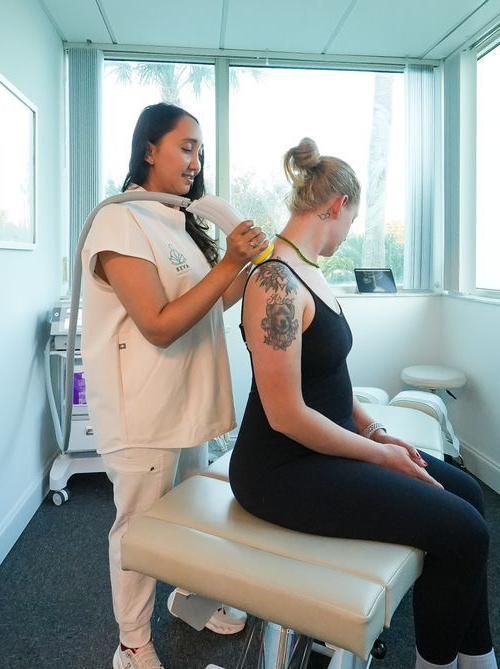
SoftWave therapy uses acoustic waves — precisely calibrated pulses of energy — to reach the affected tissue at a depth that surface-level treatments can't access. When those waves contact stalled or scarred tissue, they create a mechanical stimulus that the body interprets as a repair signal.
That signal does two things:
- It stimulates the body's own stem cells, prompting them to migrate toward the damaged area and begin differentiation into the cell types needed for repair.
- It triggers the release of growth factors — the chemical messengers that coordinate tissue rebuilding, reduce chronic inflammation, and restore blood flow to areas that have become restricted.
This is cellular regeneration therapy in its most direct form: not a substance introduced from outside, but a conversation restarted inside your own biology.
How This Differs from Treatments That Only Manage Symptoms
Most interventions for chronic pain — anti-inflammatories, corticosteroid injections, passive modalities — work by quieting the pain signal rather than addressing what's producing it. They can offer real relief, and we don't dismiss that. But they don't change the condition of the underlying tissue.
SoftWave's mechanism is different in kind, not just degree. The acoustic waves aren't suppressing a symptom. They're prompting the tissue itself to resume a process it had stopped. The distinction matters because it determines what's possible over time — whether the structure of the tissue changes or whether the same pattern returns the moment the intervention stops.
For patients in Palm Beach Gardens who have tried regenerative chiropractic therapy or other approaches without lasting results, this mechanism is often what was missing.
Where Cellular Activation Fits in Your Care Plan
At SEVA, SoftWave therapy is never delivered as a stand-alone procedure. Cellular activation is most effective when the structural conditions that contributed to the original injury are also being addressed — which is why we integrate it within a broader care plan that includes chiropractic correction and, where appropriate, Ayurvedic wellness support.
A tissue that is being mechanically stimulated to repair will heal into whatever structural environment surrounds it. If that environment hasn't changed — if the spine is still misaligned, if postural patterns are still loading the same joints — the repaired tissue faces the same stress that damaged it in the first place. The three-phase approach we use at SEVA is designed so that cellular activation and structural correction happen together, not in sequence.
Questions About Cellular Activation and SoftWave Therapy
Can a chiropractor help fix my posture?
Yes, chiropractic care can help improve posture by addressing movement restrictions, muscle imbalances, spinal alignment issues, and posture habits contributing to tension or discomfort. At Seva Chiropractic, posture correction focuses on understanding why certain patterns keep returning instead of only treating symptoms temporarily. Treatment may include chiropractic adjustments, movement recommendations, posture awareness strategies, and lifestyle guidance depending on the patient’s needs. Improving posture is usually a gradual process that becomes more sustainable with consistency and daily habit changes.
Where can I get a posture assessment in Palm Beach Gardens?
Seva Chiropractic offers posture assessments and posture-focused chiropractic care in Palm Beach Gardens near Downtown Palm Beach Gardens and PGA National. Patients visit from nearby areas including Jupiter, Juno Beach, North Palm Beach, and West Palm Beach for personalized posture correction support. Assessments look at movement patterns, alignment, muscle tension, posture habits, and daily lifestyle factors that may be contributing to discomfort. Online booking is available for new patients.
What happens in posture correction treatment?
Posture correction treatment typically begins with a consultation and assessment focused on how your body moves, compensates, and responds to daily stress patterns. Care may include chiropractic adjustments, posture awareness training, movement recommendations, mobility support, and exercises designed around your specific posture needs. Some patients also benefit from ergonomic changes or modifications to desk setups and repetitive routines. Treatment plans are designed to feel manageable and personalized rather than overly complicated.
How long does posture correction take?
The timeline for posture correction depends on how long posture patterns have been present, the severity of muscle imbalance or tension, and how consistently corrective habits are followed outside the office. Some patients notice early improvements in tension and awareness within a few visits, while long-term posture changes may take more time and consistency. Daily habits such as screen use, sitting posture, exercise routines, and work environments also influence progress. Seva Chiropractic focuses on creating realistic care plans that support gradual improvement over time.
What are signs that poor posture may be affecting me?
Common signs include neck stiffness, shoulder tightness, headaches, upper back tension, low back discomfort, fatigue from sitting, reduced mobility, and recurring tension after long hours on screens or driving. Some patients also notice uneven posture, rounded shoulders, or discomfort during exercise and daily activities. Poor posture can gradually place extra stress on muscles and joints even before pain becomes severe. A posture assessment can help identify patterns that may be contributing to these symptoms.