

Focused Energy Delivered Exactly Where Your Body Needs It
Acoustic wave therapy works because it goes where the problem actually lives — not around it, not near it, but directly to the tissue that hasn't been healing on its own.
What "Targeted" Actually Means in Practice
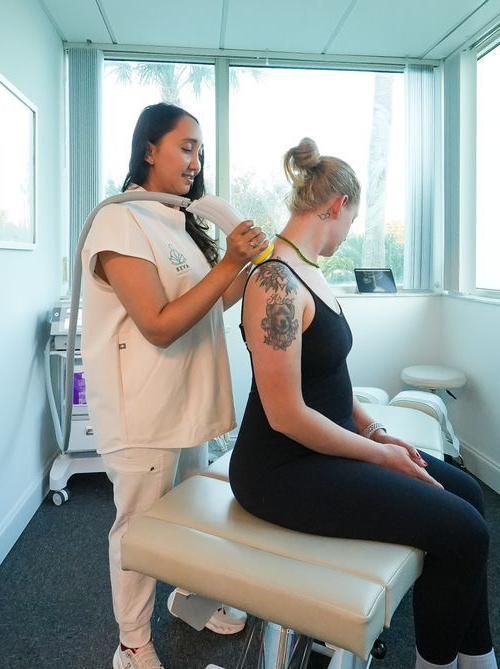
A handheld applicator is moved across the skin over the affected area, and with each pass, it delivers focused, high-energy acoustic pulses directly into the injured or inflamed tissue below. No incisions. No needles. No heat applied to the surface. The energy travels through the skin and concentrates at the precise depth where chronic tension, micro-damage, or inflammation has stalled the body's natural repair process. This is what separates SoftWave from generalized therapies — the delivery is specific, and specificity is what makes the difference.
How the Wave Reaches Damaged Tissue Without Breaking the Skin
The acoustic pulse is generated within the handheld device and transmitted through a coupling medium — a gel applied to the skin — that allows the energy to pass cleanly through the surface layers without scattering. Once inside the tissue, the wave's mechanical energy interacts with cells at the site of injury, creating a controlled microenvironment that signals the body to respond. Think of it less like a force being applied and more like a precise communication — the wave tells the tissue something needs attention here, and the body's own repair systems answer.
The depth and intensity of each pulse can be adjusted based on the tissue being treated, which means the same technology that addresses a superficial tendon can reach deeper structures like spinal ligaments or hip joint tissue without changing the external setup.
Is Acoustic Wave Therapy Painful?
This is the question we hear most often, and it deserves a direct answer. Most patients describe the sensation as a mild tapping or pressure — noticeable, but not sharp or difficult to tolerate. The word "shockwave" carries connotations that don't reflect what the treatment actually feels like. There is no shock, no jolt, and nothing that requires anesthesia or recovery time afterward.
Patients with significant inflammation or acute tenderness may feel more sensitivity in those specific areas during the first session, which is normal — it reflects the tissue's current state, not the intensity of the device. That sensitivity typically decreases as treatment progresses and the underlying condition begins to resolve.
What Conditions Respond to Focused Acoustic Pulses
SoftWave's targeted delivery makes it effective across a wide range of musculoskeletal conditions — particularly those where conventional approaches have produced limited or temporary results. Conditions that respond well include:
- Chronic low back pain and lumbar disc irritation
- Plantar fasciitis and heel pain
- Shoulder tendinopathy and rotator cuff strain
- Knee pain, including patellar tendon involvement
- Hip flexor tightness and bursitis
- Cervical tension and upper back stiffness
- Post-injury scar tissue and adhesions
At SEVA, acoustic wave therapy is never applied as a standalone fix. It is delivered as part of a structured care plan — one that accounts for the structural alignment work and whole-body context that determines whether tissue can heal and stay healed.
Your Questions About Acoustic Wave Therapy, Answered
Can a chiropractor help fix my posture?
Yes, chiropractic care can help improve posture by addressing movement restrictions, muscle imbalances, spinal alignment issues, and posture habits contributing to tension or discomfort. At Seva Chiropractic, posture correction focuses on understanding why certain patterns keep returning instead of only treating symptoms temporarily. Treatment may include chiropractic adjustments, movement recommendations, posture awareness strategies, and lifestyle guidance depending on the patient’s needs. Improving posture is usually a gradual process that becomes more sustainable with consistency and daily habit changes.
Where can I get a posture assessment in Palm Beach Gardens?
Seva Chiropractic offers posture assessments and posture-focused chiropractic care in Palm Beach Gardens near Downtown Palm Beach Gardens and PGA National. Patients visit from nearby areas including Jupiter, Juno Beach, North Palm Beach, and West Palm Beach for personalized posture correction support. Assessments look at movement patterns, alignment, muscle tension, posture habits, and daily lifestyle factors that may be contributing to discomfort. Online booking is available for new patients.
What happens in posture correction treatment?
Posture correction treatment typically begins with a consultation and assessment focused on how your body moves, compensates, and responds to daily stress patterns. Care may include chiropractic adjustments, posture awareness training, movement recommendations, mobility support, and exercises designed around your specific posture needs. Some patients also benefit from ergonomic changes or modifications to desk setups and repetitive routines. Treatment plans are designed to feel manageable and personalized rather than overly complicated.
How long does posture correction take?
The timeline for posture correction depends on how long posture patterns have been present, the severity of muscle imbalance or tension, and how consistently corrective habits are followed outside the office. Some patients notice early improvements in tension and awareness within a few visits, while long-term posture changes may take more time and consistency. Daily habits such as screen use, sitting posture, exercise routines, and work environments also influence progress. Seva Chiropractic focuses on creating realistic care plans that support gradual improvement over time.
What are signs that poor posture may be affecting me?
Common signs include neck stiffness, shoulder tightness, headaches, upper back tension, low back discomfort, fatigue from sitting, reduced mobility, and recurring tension after long hours on screens or driving. Some patients also notice uneven posture, rounded shoulders, or discomfort during exercise and daily activities. Poor posture can gradually place extra stress on muscles and joints even before pain becomes severe. A posture assessment can help identify patterns that may be contributing to these symptoms.