

More Blood Flow. Less Inflammation. More Movement.
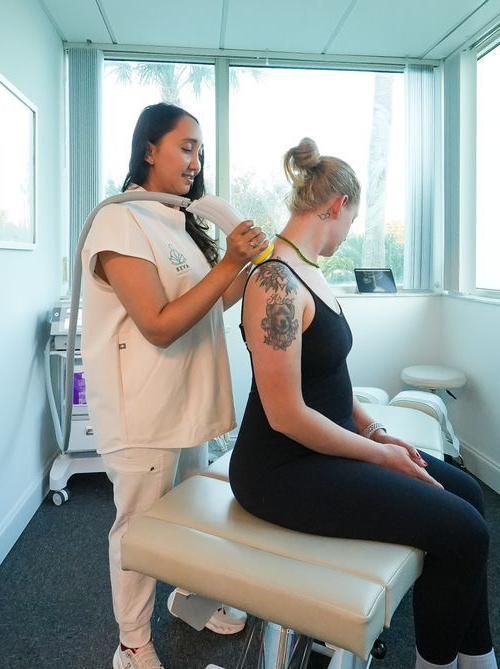
Healing from chronic pain or injury isn't a single event — it's a process. SoftWave therapy works by increasing circulation to damaged tissue, which gives your body the raw materials it needs to reduce inflammation and restore mobility over the course of care.
Why Circulation Is the Foundation of Tissue Repair
When blood flow to an injured or inflamed area is restricted, healing stalls. Nutrients can't reach the tissue. Waste products accumulate. Inflammation persists. SoftWave therapy addresses this directly — acoustic waves stimulate the local vascular response, drawing increased blood flow to the treated area and creating the conditions your body needs to actually repair.
This is why SoftWave isn't positioned as a pain-management tool at SEVA. It's used as part of a root-cause plan because improving circulation and reducing inflammation are foundational steps toward lasting structural recovery, not just temporary relief.
What Happens Inside the Tissue During Treatment
SoftWave's acoustic waves trigger a cascade of biological responses at the cellular level. Each session builds on the last.
- Increased blood flow delivers oxygen and growth factors to damaged tissue
- Inflammatory markers in the treated area begin to decrease over successive sessions
- Collagen synthesis and cellular repair activity accelerate
- Restricted or guarded movement patterns begin to ease as pain and swelling reduce
- Mobility restoration follows as the underlying tissue heals rather than compensates
This is a cumulative process. The goal is not to suppress symptoms — it's to give the tissue what it needs to repair itself.
How Long Does SoftWave Take to Work?
This is the question most patients ask first, and it deserves a direct answer. Most patients begin to notice meaningful changes within three to six sessions, though the timeline varies based on the severity and chronicity of the condition being treated. Acute injuries tend to respond faster. Long-standing dysfunction — tissue that has been inflamed or restricted for months or years — takes longer to turn around.
At SEVA, we set realistic expectations from the start. Improved circulation and reduced inflammation build session by session. You will not feel the full effect after one visit, and any practice that suggests otherwise is not being honest with you. What most patients do notice early is a reduction in acute pain and some loosening of restricted movement — the deeper repair continues to develop over the full course of care.
How SoftWave Fits Into Your Care Plan at SEVA
SoftWave therapy is not offered as a stand-alone service at our Palm Beach Gardens practice. It is integrated into a broader care plan that may include chiropractic adjustments, posture correction, and Ayurvedic wellness support — depending on what your body needs.
This matters for circulation and repair outcomes because structural misalignment can restrict the very blood flow SoftWave is working to restore. Addressing both simultaneously produces results that neither modality achieves as effectively on its own. If you're dealing with reduced mobility in Palm Beach Gardens or the surrounding area and want to understand how this approach applies to your specific situation, a complimentary consultation is the right starting point.
Common Questions About Circulation, Healing, and SoftWave
Can a chiropractor help fix my posture?
Yes, chiropractic care can help improve posture by addressing movement restrictions, muscle imbalances, spinal alignment issues, and posture habits contributing to tension or discomfort. At Seva Chiropractic, posture correction focuses on understanding why certain patterns keep returning instead of only treating symptoms temporarily. Treatment may include chiropractic adjustments, movement recommendations, posture awareness strategies, and lifestyle guidance depending on the patient’s needs. Improving posture is usually a gradual process that becomes more sustainable with consistency and daily habit changes.
Where can I get a posture assessment in Palm Beach Gardens?
Seva Chiropractic offers posture assessments and posture-focused chiropractic care in Palm Beach Gardens near Downtown Palm Beach Gardens and PGA National. Patients visit from nearby areas including Jupiter, Juno Beach, North Palm Beach, and West Palm Beach for personalized posture correction support. Assessments look at movement patterns, alignment, muscle tension, posture habits, and daily lifestyle factors that may be contributing to discomfort. Online booking is available for new patients.
What happens in posture correction treatment?
Posture correction treatment typically begins with a consultation and assessment focused on how your body moves, compensates, and responds to daily stress patterns. Care may include chiropractic adjustments, posture awareness training, movement recommendations, mobility support, and exercises designed around your specific posture needs. Some patients also benefit from ergonomic changes or modifications to desk setups and repetitive routines. Treatment plans are designed to feel manageable and personalized rather than overly complicated.
How long does posture correction take?
The timeline for posture correction depends on how long posture patterns have been present, the severity of muscle imbalance or tension, and how consistently corrective habits are followed outside the office. Some patients notice early improvements in tension and awareness within a few visits, while long-term posture changes may take more time and consistency. Daily habits such as screen use, sitting posture, exercise routines, and work environments also influence progress. Seva Chiropractic focuses on creating realistic care plans that support gradual improvement over time.
What are signs that poor posture may be affecting me?
Common signs include neck stiffness, shoulder tightness, headaches, upper back tension, low back discomfort, fatigue from sitting, reduced mobility, and recurring tension after long hours on screens or driving. Some patients also notice uneven posture, rounded shoulders, or discomfort during exercise and daily activities. Poor posture can gradually place extra stress on muscles and joints even before pain becomes severe. A posture assessment can help identify patterns that may be contributing to these symptoms.